
by Diana Azzopardi, State Registered Nutritionist
September marks the final month of the summer holidays and the beginning of a new academic year. Many of us have enjoyed a more relaxed summer schedule with later bedtimes, variable mealtimes and less overall planning. While this has been a welcome break from sometimes demanding school and extracurricular activity schedules, now is probably a good time to start planning a transition from the flexible summer routine to a more structured school routine. This may help reduce the stress that sometimes comes with changing routines and make the start of a new academic year more comfortable for families with children and adolescents.
One way to bring back more structure into the day is by having regular mealtimes. Preparing balanced meals, especially for a family with young children or teens who seem to be hungry all the time, is time-consuming and can become exhausting over time. To help make preparing meals just a little bit easier, this article shares practical ideas for breakfast, school lunchboxes and family dinners alongside simple time-saving tips.
1. First things first: breakfast.
While not everyone feels hungry in the morning, it is recommended to at least eat something small before heading out of the house, as research shows that skipping breakfast entirely is associated with lower school performance and increased psychological distress in children and teens.
Some breakfast options:
brown toast with eggs and spinach;
a pot of Greek yoghurt with granola or overnight oats with fruit;
banana and oat pancakes with berries.
For small appetites, a few gulps of a simple smoothie (milk or yoghurt blended with a frozen ripe banana and berries) or a yoghurt pouch with a piece of fruit on the go would still make a good start to the day.

All these options contain complex carbohydrates and some protein to ensure steady energy levels for the brain and body to keep children and teens going until lunchtime.
1 Prepare in advance to save time in the morning:
boil eggs and store them unpeeled in the fridge for up to 5 days;
freeze cooked pancakes and reheat in a toaster or on a griddle;
portion and freeze smoothie ingredients in reusable freezer bags.
2. Eatingatschool:lunchbox.
The job of a well-balanced lunchbox is to keep children and teens energised and full for the second part of the day - the afternoon - and to provide important nutrients, such as vitamins and minerals. This helps them stay focused and learn new information during school hours.
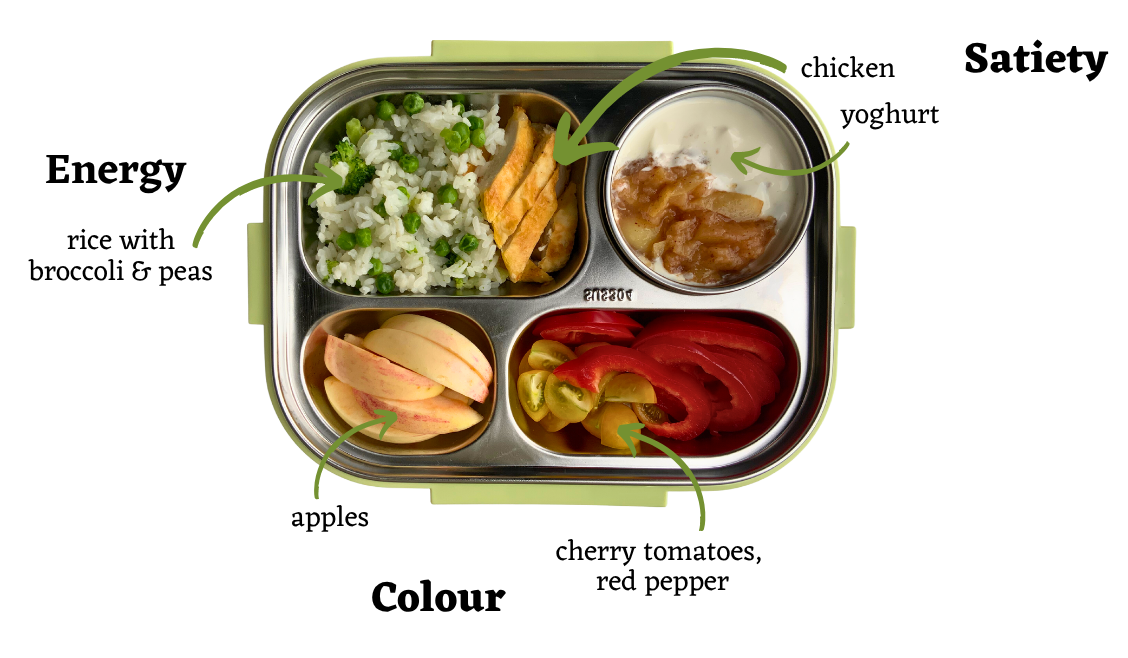
A simple “formula” for building a balanced lunchbox = energy + satiety + colour.
Energy. All foods provide energy; however, the best sources are fibre-rich carbohydrates, such as wholegrain bread, wraps, rice and wholemeal pasta, or starchy vegetables, such as peas or corn.
Satiety comes from protein-rich foods, e.g., chicken, turkey and other lean meats, eggs, tuna, cheese, Greek yoghurt, tofu and legumes, such as beans and lentils, or from foods containing healthy fats, such as avocado or olive oil.
Colour. Vegetables, fruit and berries in all the colours of the rainbow provide a wide variety of vitamins & minerals. Choose according to children's preferences and the season.
Source: own photo
Prepare in advance to save time in the morning:
cut up veggies and fruit and store them in the fridge for up to 3 days;
repurpose dinner leftovers, such as pasta, sliced chicken breast and meatballs;
cook and freeze in advance: mini quiches and pizzas, savoury mu]ins, mini pies.
Remove from the freezer the night before and let them thaw overnight.
3. Familydinners
For many families, preparing and enjoying dinner together can be an opportunity to exchange stories about the day.
Here are some tips to make preparing for this special mealtime as stress-free as possible:

Meal planning. Having a plan for each dinner of the week removes decision-making when mental energy is low and helps families source the required ingredients in advance during the weekly food shop.
Batch cooking. A great way to ensure the family enjoys a balanced meal even on the busiest days. Either (1) double or even triple a selected recipe and freeze the extra portion(s) for another time, or (2) prepare certain foods, such as quinoa or chicken, in larger quantities at the beginning of the week for use in various meals or recipes later in the week. Keep them refrigerated for 3-4 days or frozen for several weeks. For example, cooked chicken breasts can be used in sandwiches, added to salads, stirred into a risotto or added to a bowl of vegetable soup.
Preparing frequently used ingredients. Certain ingredients are used in many recipes, such as chopped onion and minced garlic. Next time you chop an onion, double or triple the quantity and store the extra in the fridge for up to 3 days or in the freezer for several weeks to save time when preparing the next meal.
Regular mealtimes can help establish predictable routines and support the whole family as they settle back into the school routine. Hopefully, these practical ideas and time-saving tips will help make the transition a little easier.
send an email to info@movesemc.com.mt to schedule an online appointment with Diana.
