
Lifestyle Medicine Starts with Us
By Andrea Saliba, MD, MRCPsych, MHSc
Physicians’ health habits are not entirely separate from patient care, as they can influence the care patients receive. A growing body of research suggests an important link: when doctors model healthy behaviours themselves, patients may be more likely to achieve better health outcomes.
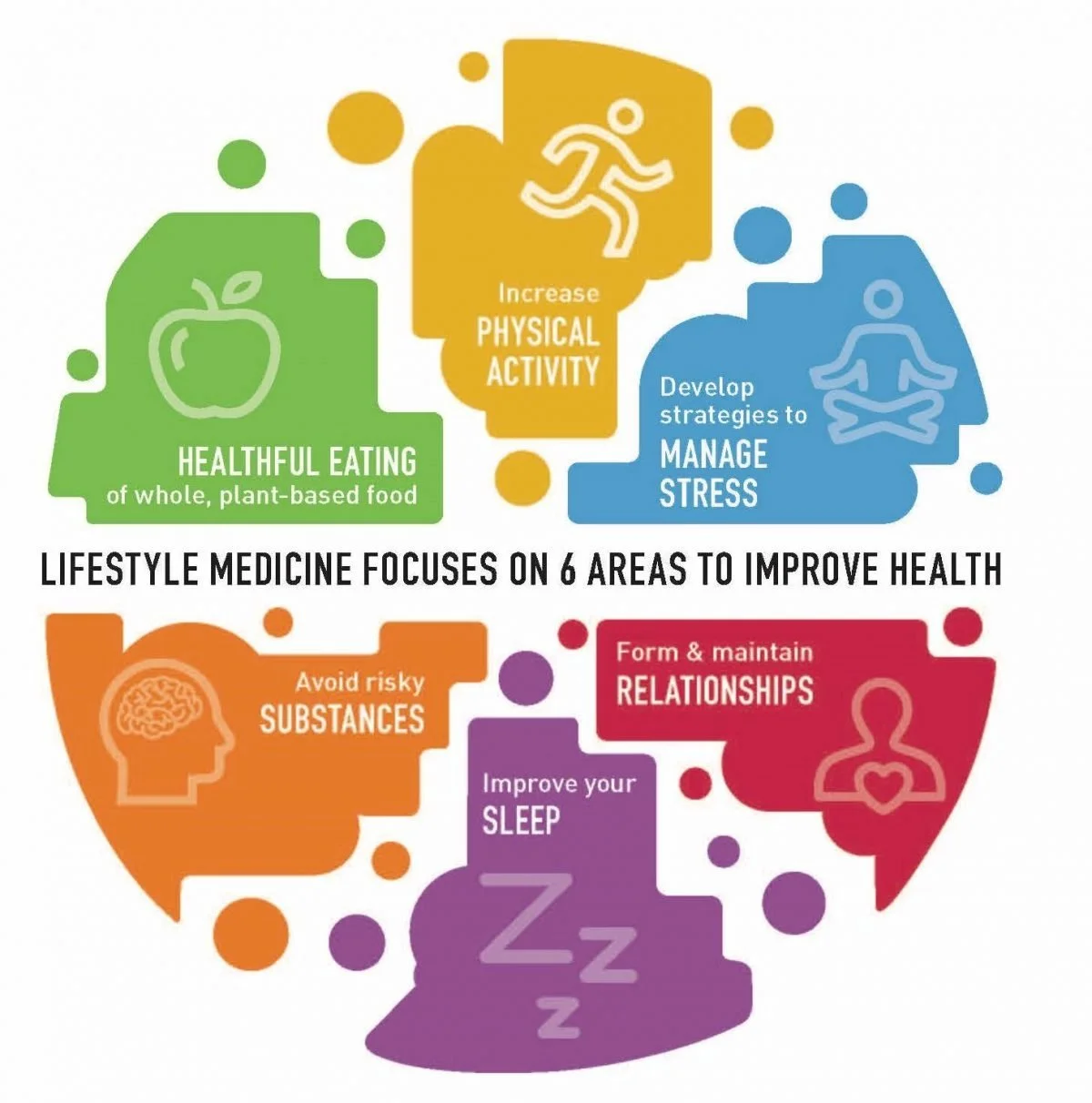
Lifestyle psychiatry, a subspecialty sitting at the intersection of lifestyle medicine and psychiatry, places emphasis on the role of everyday behaviours: whole-food nutrition, physical activity, restorative sleep, stress management, social connection, and avoidance of risky substances in the prevention and treatment of both psychiatric and physical illness. Within this framework, the physician's own lifestyle is not incidental. It is clinically relevant.
Psychiatrists and other mental health providers are well placed to recognise the barriers that prevent people from making sustainable lifestyle changes: occupational burnout, social disadvantage, unresolved trauma, emotional dysregulation, and enduring personality patterns. But the evidence now also asks us to turn this lens inward, and to consider how physician self-care shapes the care that patients ultimately receive.
When the doctor moves, patients move too
The research is consistent: physicians who are physically active are significantly more likely to counsel their patients on exercise, spend more time doing so, and feel more confident about its clinical value. This is not simply a correlation; it reflects something about authenticity. Patients are more receptive to lifestyle advice when they sense that their doctor lives by it.
"Patients are more receptive to advice when they perceive their physician practises what they preach."
Oberg & Frank, 2009
Systematic reviews confirm that exercise counselling rates are consistently higher among physically active clinicians. For psychiatrists in particular, maintaining their own physical activity serves a dual purpose: it protects against burnout, and it amplifies therapeutic impact by increasing patient trust and motivation to follow through on exercise prescriptions.
The influence extends to preventive care more broadly. A landmark study of nearly 1.9 million patients found that patients whose physicians personally adhered to recommended screening and vaccination practices were significantly more likely to comply with those same practices themselves, a clinically meaningful difference that persisted even after accounting for confounding factors. When a physician was vaccinated for influenza, for instance, their patients were vaccinated at a noticeably higher rate than those of unvaccinated colleagues.
Obesity counselling: a gap worth closing
Despite the scale of the challenge, fewer than half of primary care physicians in the United States consistently provide specific guidance on diet, physical activity, or weight control. Yet the evidence is clear: patients whose physicians directly discuss weight are more likely to achieve meaningful weight loss. The conversation matters and physicians who are personally engaged with their own health are more likely to have it.
Physician wellbeing: the uncomfortable numbers
Burnout, depression, anxiety, and suicidality remain pressing concerns among physicians. While US burnout rates have declined from their pandemic-era peak, they remain substantially higher than in the general population. Psychiatrists face distinctive pressures: the emotional labour of managing trauma, high levels of patient distress, and the constant challenge of professional boundaries.
Suicide risk among physicians has declined relative to the general population over time, but it remains significantly elevated among female physicians, with a rate ratio of 1.76 compared to non-physicians of the same gender. This finding underscores the need for ongoing, targeted mental health support within the profession, and not merely individual resilience strategies.
Moral resilience: beyond surviving to thriving
Healthcare involves a particular kind of suffering, moral suffering, that arises from ethical distress, the experience of wrongdoing, or sustained moral strain. Left unaddressed, this can compromise care quality, damage teamwork, and erode professional wellbeing. Moral resilience is the capacity to maintain integrity in the face of such adversity.
Cultivating moral resilience involves six core capacities:
Personal integrity: Clarity about one's own values and ethical commitments
Relational integrity: Maintaining honest, ethical relationships with colleagues and patients
Buoyancy: The capacity to recover and adapt after moral adversity
Self-regulation: Managing emotional and physiological responses to distress
Self-stewardship: Active care for one's own wellbeing as a professional responsibility
Moral efficacy: Confidence in one's ability to act ethically even under pressure
These capacities can be developed, and when they are, they allow professionals to transform moral suffering into an opportunity for growth rather than depletion.
Training the next generation
The habits formed during medical training tend to persist. Residency is a particularly high-risk period: long hours, sleep disruption, and emotional stress routinely undermine healthy habits and accelerate burnout. Embedding lifestyle medicine throughout medical education, across disciplines and training years, is essential. However, this remains challenging due to limited curricular time, insufficient faculty expertise, and a medical culture that often continues to value self-sacrifice over self-care.
Evidence from Emory University School of Medicine showed that a personal health promotion intervention during medical school led to meaningfully better preventive counselling practices among students for exercise, diet, and tobacco cessation. Similar patterns have been observed in Colombia, where medical students with healthier personal habits showed more positive attitudes toward counselling patients on nutrition and alcohol, independent of year of training or gender.
A 2022 systematic review found that deliberate role modelling in general practice training profoundly shapes trainees attracting or discouraging them from the field, shaping their perceptions of what medicine should look like, and supporting their professional development. Role modelling is not passive. It is a powerful educational strategy.
Culture, systems, and the limits of individual willpower
Physician health behaviours do not exist in a vacuum. Long shifts, administrative overload, hierarchical cultures, and inadequate organisational support all create barriers to healthy living. The WHO has been clear: burnout is a symptom of dysfunctional health systems, not of individual weakness.
Globally, physician burnout prevalence ranges from under 1% to over 80%, reflecting how deeply embedded national culture, economic structures, and regulatory norms are in shaping clinician wellbeing. Ireland's hospital doctors, for example, have lower smoking rates than the general population but higher rates of harmful alcohol consumption and lower levels of health-enhancing physical activity. The picture is complex, and it varies significantly across countries.
Meaningfully improving physician health requires more than individual behaviour change. It requires institutional reform: reducing administrative burden, building cultures where self-care is normalised, and embedding wellbeing into the fabric of medical education and practice environments. The Royal College of Physicians and Surgeons of Canada now formally recognise self-care as a core competency. This is a model worth replicating.
Tools and training for physician wellness
A growing ecosystem of resources now supports physicians in pursuing formal training in lifestyle medicine. Residency programmes in the United States have integrated lifestyle medicine curricula across more than 200 programmes. The European Lifestyle Medicine Organization offers evidence-based certification. The International Board of Lifestyle Medicine provides global certification for physicians and health professionals.
Open-access curricula developed through initiatives like the Global Forum for Preventive, Community, and Public Health Medicine allow institutions worldwide to integrate lifestyle medicine training without cost or geographic barrier. These resources make it possible to reach clinicians at every stage of their careers.
Digital mental health tools such as smartphone applications, virtual reality interventions, and AI-assisted platforms have shown promise in reducing burnout, depression, and suicidal ideation among healthcare populations, often circumventing barriers such as stigma, confidentiality concerns, and time constraints. The field is young, and these tools must be co-designed with clinicians and grounded in rigorous evidence if they are to fulfil their potential.
A closing thought
The evidence is clear. Physician health habits matter for the doctor, and for the patient. By prioritising their own wellbeing, psychiatrists and other health professionals enhance not only their personal health but also their credibility and effectiveness as lifestyle counsellors.
Reframing self-care not as a luxury, but as an integral part of clinical excellence and therapeutic authenticity, may be one of the most important shifts our profession can make.
Key takeaways
Physicians who practise healthy lifestyle behaviours are significantly more likely to counsel patients on those same behaviours and achieve better patient outcomes.
Patients perceive advice from physicians who model healthy living as more authentic and credible, leading to greater trust and adherence.
Physician burnout and health disparities remain serious concerns and are symptoms of systemic problems, not individual failings.
Medical student wellness interventions improve future preventive counselling attitudes and practices across diverse cultural contexts.
System-level reforms, not just individual resilience, are essential to sustainably improve physician wellbeing.
Physician self-care is a core component of professional responsibility and clinical excellence, not an optional extra.
References
Oberg E, Frank E. Physicians' health practices strongly influence patient health practices. Journal of the Royal College of Physicians of Edinburgh. 2009;39(4):290–291.
Frank E, Biola H, Burnett CA. Mortality rates and causes among US physicians. American Journal of Preventive Medicine. 2000;19(3):155–159.
Patel VR, Liu M, Worsham CM, et al. Mortality among US physicians and other health care workers. JAMA Internal Medicine. 2025;185(5):563.
Frank E, Dresner Y, Shani M, Vinker S. The association between physicians' and patients' preventive health practices. Canadian Medical Association Journal. 2013;185(8):649–653.
Carlos S, Rico-Campà A, De La Fuente-Arrillaga C, et al. Do healthy doctors deliver better messages of health promotion to their patients? European Journal of Public Health. 2020;30(3):438–444.
Lobelo F, Duperly J, Frank E. Physical activity habits of doctors and medical students influence their counselling practices. British Journal of Sports Medicine. 2009;43(2):89–92.
Smith AW, Borowski LA, Liu B, et al. US primary care physicians' diet, physical activity, and weight-related care of adult patients. American Journal of Preventive Medicine. 2011;41(1):33–42.
Pool AC, Kraschnewski JL, Cover LA, et al. The impact of physician weight discussion on weight loss in US adults. Obesity Research & Clinical Practice. 2014;8(2):e131–e139.
Shanafelt TD, West CP, Dyrbye LN, et al. Changes in burnout and satisfaction with work-life integration in physicians during the first 2 years of the COVID-19 pandemic. Mayo Clinic Proceedings. 2022;97(12):2248–2258.
Zimmermann C, Strohmaier S, Herkner H, Niederkrotenthaler T, Schernhammer E. Suicide rates among physicians compared with the general population in studies from 20 countries. BMJ. 2024;386:e078964.
Rushton CH. Moral Resilience: Transforming Moral Suffering in Healthcare. Oxford University Press; 2024.
Frank E, Carrera JS, Elon L, Hertzberg VS. Predictors of US medical students' prevention counseling practices. Preventive Medicine. 2007;44(1):76–81.
Duperly J, Lobelo F, Segura C, et al. The association between Colombian medical students' healthy personal habits and a positive attitude toward preventive counseling. BMC Public Health. 2009;9(1):218.
Lamb E, Burford B, Alberti H. The impact of role modelling on the future general practitioner workforce: a systematic review. Education for Primary Care. 2022;33(5):265–279.
Rotenstein LS, Torre M, Ramos MA, et al. Prevalence of burnout among physicians: a systematic review. JAMA. 2018;320(11):1131–1150.
Holtzclaw L, Arlinghaus KR, Johnston CA. The health of health care professionals. American Journal of Lifestyle Medicine. 2020;15(2):130–132.
Pospos S, Young IT, Downs N, et al. Web-based tools and mobile applications to mitigate burnout, depression, and suicidality among healthcare students and professionals: a systematic review. Academic Psychiatry. 2018;42(1):109–120.
Merlo G, Sugden SG. The power of lifestyle psychiatry: a new approach to mental health. American Journal of Lifestyle Medicine. 2025. doi:10.1177/15598276251329915.
Frates B, Ortega HA, Freeman KJ, et al. Lifestyle medicine in medical education: maximizing impact. Mayo Clinic Proceedings: Innovations, Quality & Outcomes. 2024;8(5):451–474.
Frank E, Saliba A. Preventive/Community/PH/Lifestyle Medicine Curriculum. Global Forum for Community Health, PH and Preventive Medicine; November 2025.
